When people find out that I’m half Mexican, they typically follow-up with – Do you speak Spanish?
I don’t like the answer because well, No. But I really wish I did – for many reasons. I get defensive and begin explaining why but really, no on cares but me.
My dad was born and raised in Mexico until his teens. My mom is white as can be which has resulted in my light eyes and light complexion. To this day, my dad refers to me as his güera daughter, aka white girl. While I know he’s mostly being funny, it still feels like a dig.
Out of that entire side of the family, I am seemingly the only mutt. I can describe it as standing outside of a house that I am technically allowed to go into but don’t have the right key. Once my dad arrives, with the correct key, I can go in with him as my escort.
Unlike feeling out of place in school because I didn’t fit into a certain clique or being seen as unprofessional at work for most often being the youngest with visible tattoos, this is different and hits a bit harder.
Navigating through my identity crisis has brought attention to the lack of connection I have with my biological roots that I can’t say I know too much about. Besides my maiden name and having my dad’s nose, there really isn’t anything that directly links me to this complex culture. While I could unpack the reasons behind feeling disconnected from half of my roots, my focus has been on educating myself about Mexican heritage and culture; beyond just my family’s experience, but in the broader sense of history, traditions, and identity.
For many years, interactions were initiated on holidays to visit my paternal grandparents (who did not speak English) and sit in wait for us to be excused so we can tend to other commitments, since our families were mostly blended, or broken, and scattered around the county. Again, being the one who did not speak Spanish; I’d sit feeling humiliated, while someone translated for me. Two hours a year was not nearly enough time to A) retain a language and B) compensate for a lifetime of natural exposure. Plus, my dad never spoke to us in Spanish for reasons I’m mostly unaware of.
This topic came up somewhat organically in a recent writing group at the prison. A participant shared that he was half-Hispanic (I don’t recall exactly from where) but did not speak Spanish, nor was he connected with his father for the majority of his life. Within the criminal justice system, classification assessments are administered very early on to determine a person’s race and ethnicity, often for identifying gangs and their members, housing purposes, cultural accommodations, demographic tracking, and to promote safety within a facility. These classifications are based on what the individual declares, not what the state assumes. From what I understand, once you declare your race in prison, it is very difficult to disclaim.
When he first came to prison, he found himself at a crossroads; unable to definitively choose who he would associate or run with, which ultimately led him to declare as: Other; further isolating him from his Hispanic roots. As time went on in prison, he was able to connect with others from similar backgrounds and has since established a new community that share and welcome his Hispanic heritage.
And, as the power of story telling often does, a handful of other participants shared similar experiences of being Hispanic and also feeling a deep disconnect to traditional culture. I was shocked to hear some stories of me, many of whom were predominantly Hispanic gangs, being unable to speak Spanish at all. I felt incredibly naive to this information.
As I have likely mentioned before, I often refrain from contributing to discussions on a personal level for obvious reasons. But, without going into detail, I found it necessary to share that since I do not speak Spanish and was not predominately raised in a Mexican household, I have not earned that right to declare that I am Mexican; that I feel like an imposter. Is this true? For me, I don’t know. For others? Of course not. I have seen biracial or multiracial people proudly declare all contributing cultures/heritages of who they are and I deeply admire them for that. I think it’s wonderful and find it completely acceptable. Somehow, I struggle to allow myself to feel that way about my circumstances. Rest assured this is at the top of my list of dilemmas to work through.
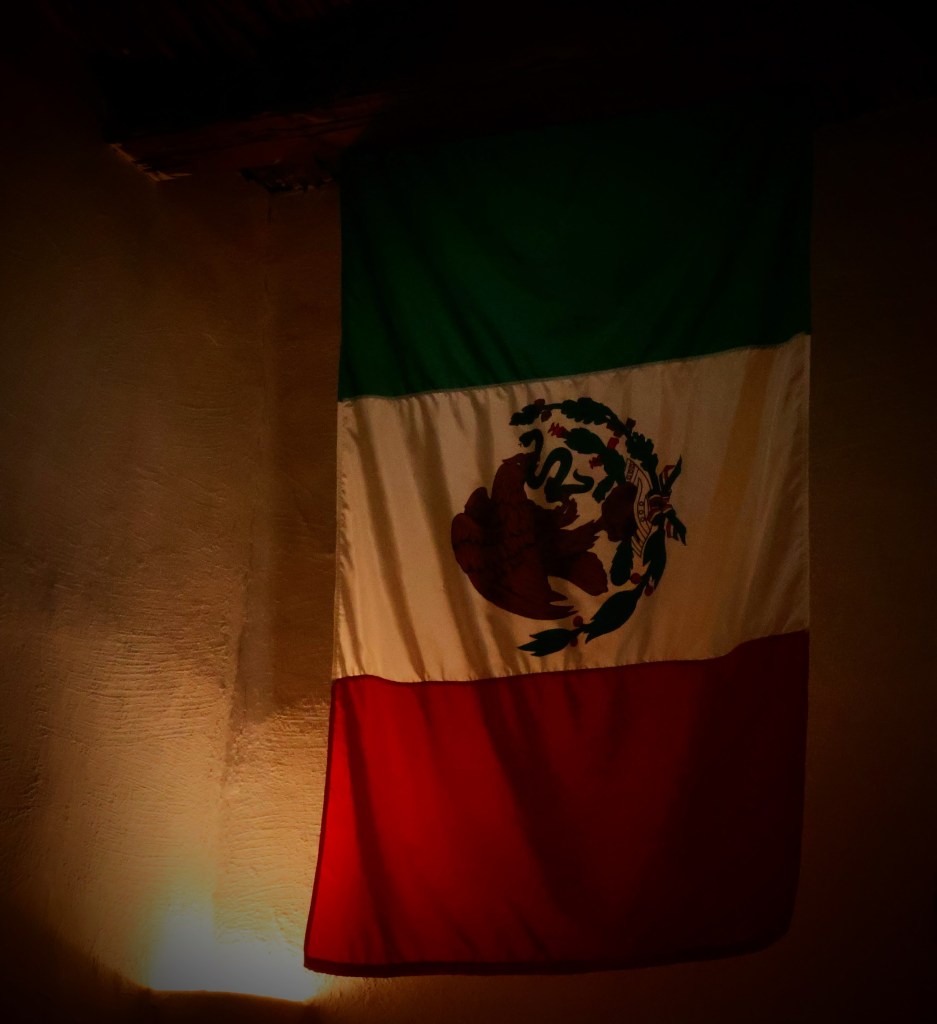
While my dad still calls me a güera, he never misses an opportunity to remind me of where I come from. Often unsolicited, he’ll go as far back in history as he can to share the complexities and the cultural significance of my family.
As I was writing this, I paused to give my dad a call. As per usual, he was under a truck working on something that probably wasn’t broken to begin with. But, that won’t stop him from crawling out and sitting on the phone with me for an hour. I didn’t tell him I was writing about this but guess who got a history lesson? 😉
E
 Captain's Trove
Leave a comment